
Investing in Ibiza Property in 2026
Buying a home in Ibiza means more than buying bricks and mortar. You are buying a place on an island where very little can still be built, where buyers from across Europe and soon America are searching, and where you can enjoy the light, the calm and the sea yourself. That is why more and more British and international buyers see a home in Ibiza not just as a holiday base but as a long-term investment. In this guide you will learn how the market stands in 2026, what you can realistically expect from returns and rentals, which property suits which strategy, and which costs and taxes you need to know as an international buyer.
The Ibiza Property Market in 2026
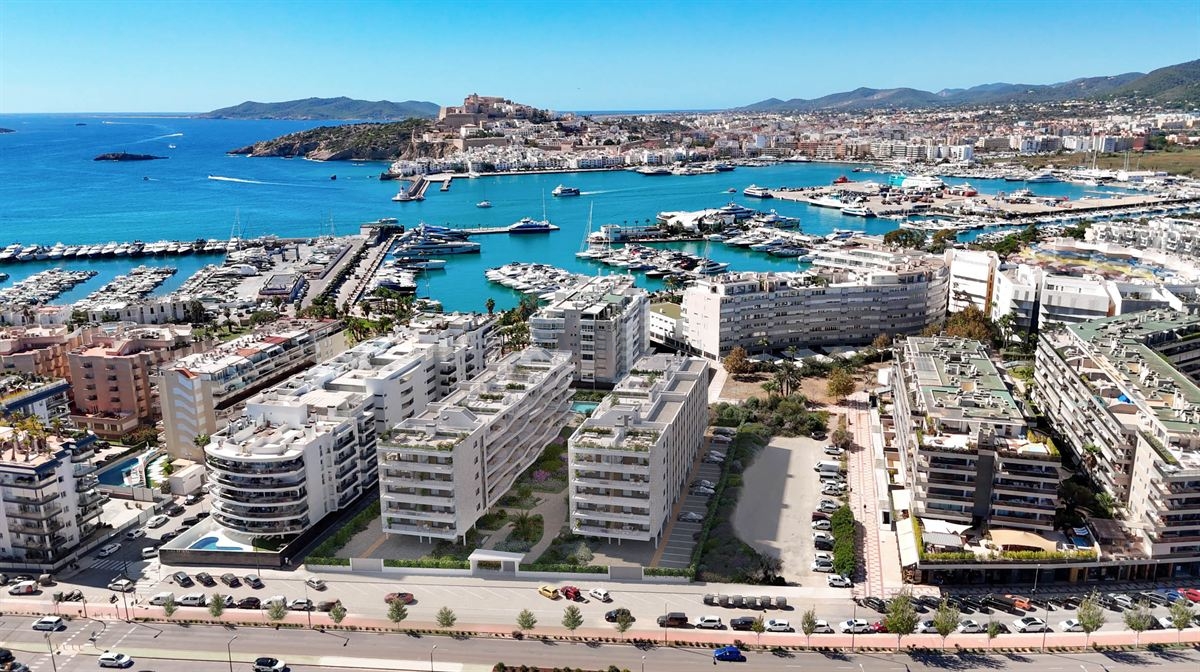
Building land is scarce, large parts of the island are protected nature and new construction is strictly limited, while demand from abroad has stayed high for years. In September 2026 the average asking price for a house in Ibiza was around €8,700 per square metre, and around €6,900 for an apartment. Apartments rose by almost 7% over the past year while house prices held steady, and in the best sea-view locations prices are considerably higher. That stability points to a mature market rather than a weak one, because buyers pay above all for quality, location and clean paperwork. Looking further back shows how strongly the market has grown, as the average price per square metre in Ibiza roughly doubled in ten years, from around €3,450 in 2016 to almost €7,000 in 2025.
Most buyers come from the UK, the Netherlands, Germany, Scandinavia and Switzerland, and with the new nonstop flight from New York from 2027, interest from the United States is growing as well. For you as an investor, that means a broad pool of buyers when you decide to sell, especially for a well located home that is legally in order. You can browse our current houses and villas for sale in Ibiza or our Ibiza mansions for sale, and as an award-winning agency we also show serious buyers homes that are never advertised online.
Why invest in Ibiza now
The scarcity in Ibiza is not going away. That does not rule out market cycles, but it does reduce the risk of sudden oversupply in the established prime areas, which is why good homes here tend to hold their value better than in many other holiday destinations. At the same time, buyers have become more demanding. A home with every permit and a correct registration sells faster, and solar panels, efficient climate control, an EV charger and modern security increasingly make the difference for rentals and resale.
For many buyers a home in Ibiza is not a pure investment either. They want to enjoy it themselves and rent it out or sell it at a profit later, and that works well as long as you know in advance what is and is not allowed. With direct flights of around two and a half hours from London and connections all year round, the island is close for you and for your guests. If you plan to rent, you will notice that professional management and strict compliance with the rules increasingly decide what an investment really returns.
Rental Returns, What Is Realistic
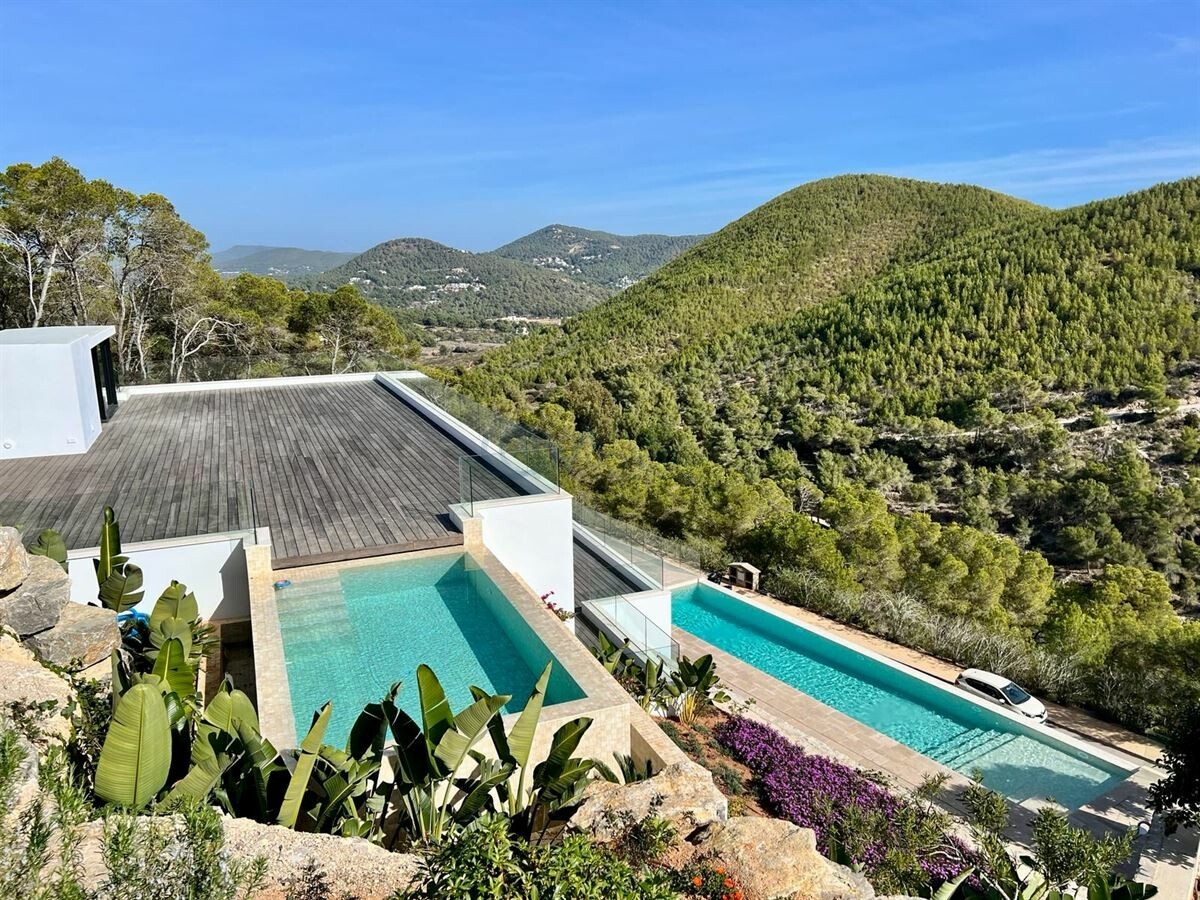
A good return in Ibiza rarely happens by itself. It comes when three things are right, namely that you buy well, with the right location and clean paperwork, that you run the property well, with the right licence and professional management, and that you sell well later, with strong presentation and the right network. In peak season exceptional villas can earn very high weekly rates, but as an investor you should always plan conservatively. The season is short, and cleaning, maintenance, management, marketing and taxes together decide what is left at the end.
Buyers at the top of the market look above all for privacy, security and a beautiful view, and they pay for it as guests too. Places such as Cala Jondal, Cap Martinet and the hills and coastline around Sant Josep have therefore been popular with investors and guests for years.
Holiday rentals only with a licence
If you want to rent for less than a month, you need a tourist rental licence in Ibiza, recognisable by a number starting with ETV. New licences are only granted for detached houses that meet strict conditions, no longer for apartments, and since 2024 holiday rentals on rural land have been heavily restricted. Renting without a licence can lead to fines of €20,000 to €40,000 per property, and the island enforces this strictly. If you plan to rent, always check before you buy whether the home has a valid licence or can obtain one.
Rentals of one month or longer fall outside the tourist rules and need no licence, as long as you do not offer hotel-style services. Seasonal lets to guests who stay for a full month or the whole summer are therefore an attractive and fully legal option for many owners.
Which Property Suits Your Strategy
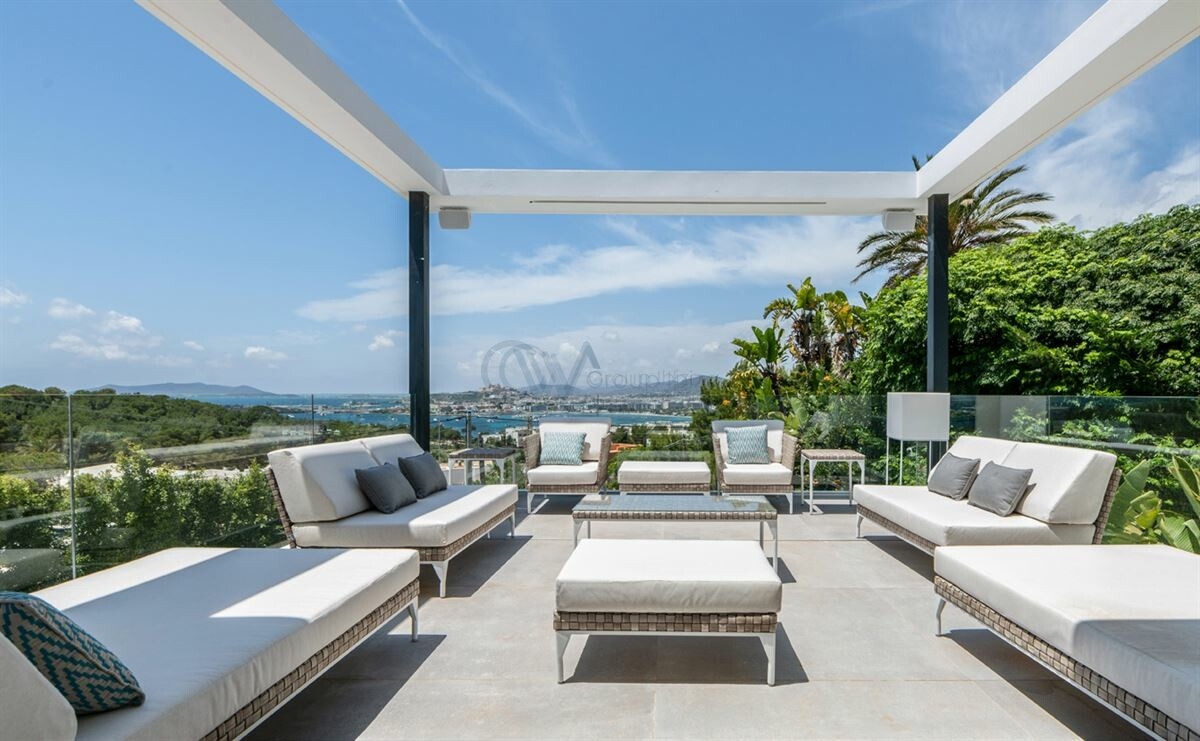
The best investment depends on what you want from the property. If you are mainly looking for capital growth and your own use, a sea-view villa in a sought-after location is often the strongest choice, because those homes are scarce and attract the most buyers when you sell. Sea views, privacy, a short drive to the airport and Ibiza Town, and good access all year round are the features that buyers pay most for, and they also hold their value best in quieter years. If you also want to rent to holiday guests, a detached villa with a valid licence is almost the only route, and those homes cost more because the licence itself adds value. Check carefully how many guests the licence allows, whether it is linked to the whole house or only part of it, and whether the pool, guest house and any extensions are fully legal, because all of that decides what you can really earn.
Luxury apartments for sale in Ibiza suit buyers who want a low-maintenance home close to the town, the marina or the beach, with lower running costs and the security of a gated community. Holiday rentals are not allowed in apartments, so plan for your own use or rentals of a month or longer, which works well for families, seasonal workers in senior roles and guests who spend the whole summer on the island. Apartments in Ibiza Town, Talamanca and Santa Eulalia are popular all year round and are among the easiest properties on the island to resell.
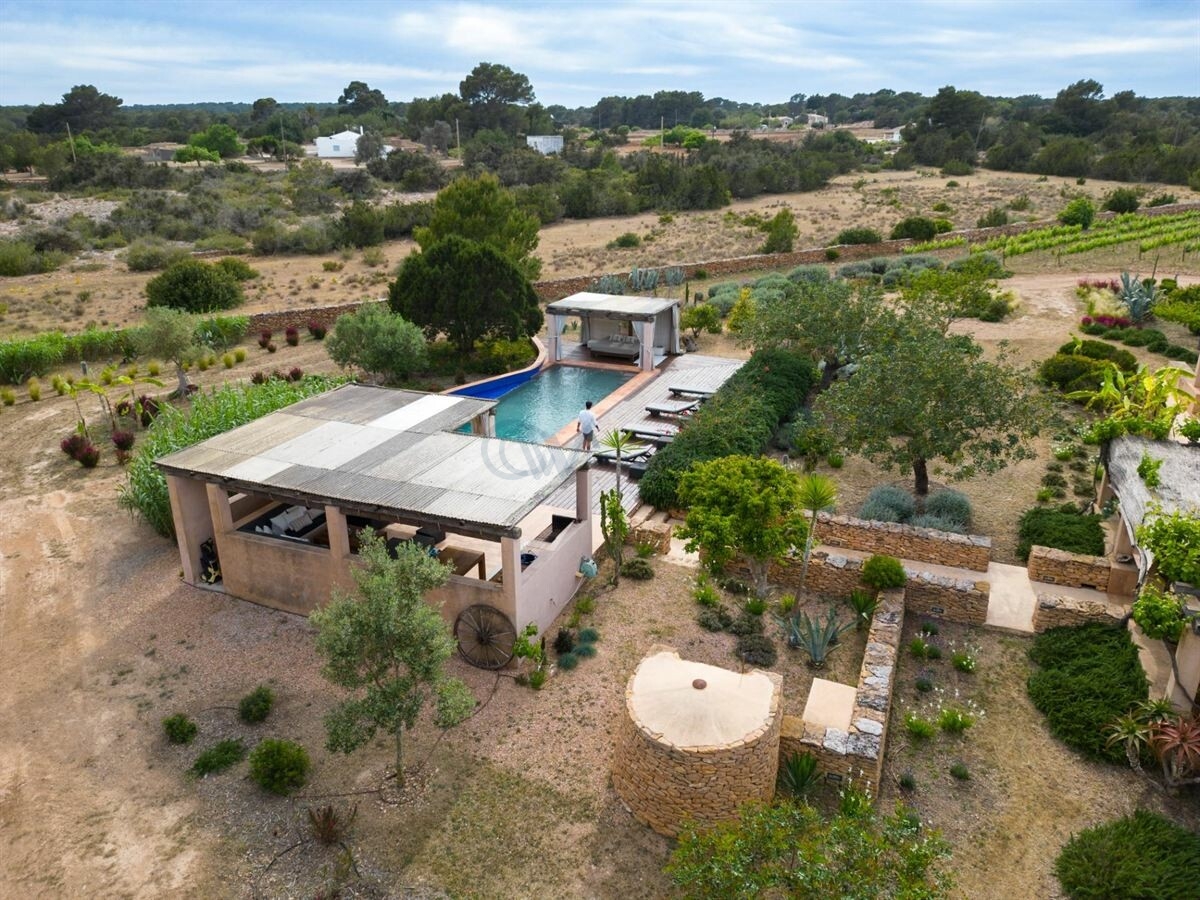
If you are looking for space, peace and character instead, take a look at our fincas for sale in Ibiza in the countryside. Old fincas often have great charm, thick stone walls and large plots, but check especially carefully what has been built legally and what you are allowed to renovate or extend, because rural land in Ibiza has strict rules. Some investors go one step further and buy one of our plots of land for sale in Ibiza to build a new villa. That can create real added value, but it requires patience, as building permits often take a year or longer, and a good architect and lawyer who know the local planning rules.
Where to Invest in Ibiza
For an investor, what matters most is how easily a property can be resold or rented later, and that varies greatly from area to area. Talamanca lies close to town and is popular for modern sea-view homes, while Ibiza Town (Eivissa), with its culture, marinas and restaurants, is lively all year round and one of the most liquid markets on the island. Santa Eulalia mainly attracts families and buyers who want to live on the island all year, with good services and lovely beaches.
Buyers looking for exclusivity and privacy often end up in Es Cubells, with prestigious villas high on the cliffs, or in the hills around San José (Sant Josep), where secluded estates offer sweeping views over the sea and the island. The south and southwest, close to the best beaches, beach clubs and the airport, generally see the strongest demand from summer guests, which makes them the first choice for investors who plan holiday rentals with a licence.
The north and east are quieter and greener, with areas such as San Juan, Portinatx and the coast around Cala Llenya and Es Canar, where some of the highest asking prices per square metre on the island are found today. These areas appeal to buyers looking for nature, space and a calmer rhythm, and to guests who stay for a month or longer rather than a single week. In the west, San Antonio is changing step by step, with new hotels and upgraded seafront areas, which some investors see as an opportunity for growth. You will find a detailed comparison of every area, with prices and the feel of each place, in our article on the best areas to buy a home in Ibiza.
Costs and Taxes for International Investors
For a resale home in Ibiza, transfer tax rises with the price, from 8% up to €400,000 to 13% above €2 million, while new builds carry 10% VAT plus stamp duty. With notary, land registry and lawyer, total costs usually come to 12 to 14% on top of the purchase price. If you want to finance part of the purchase, Spanish banks typically lend non-residents 60 to 70% of the value, and our guide to getting a mortgage in Ibiza explains how it works. Rental income is taxed in Spain, and here the difference since Brexit matters. EU residents pay 19% on net rental income after costs, while UK and other non-EU owners pay 24% on the gross rent, without deducting expenses. If you do not rent the home out, you pay a small annual tax on a deemed income based on the cadastral value, and when you sell, the buyer withholds 3% of the price as an advance on your Spanish tax on the gain, which is 19% for all non-residents.
If you live in the UK, your Spanish rental income and gains are also taxable there, but under the tax treaty between the UK and Spain the Spanish tax is credited, so you do not pay twice. In Spain, wealth tax only applies in the Balearic Islands above €3 million of net assets in Spain, although the national solidarity tax on large fortunes still applies above that level in 2026. Balearic inheritance tax for spouses and children is now close to zero, but UK inheritance tax may still apply to your worldwide assets. Please also keep in mind that UK citizens may stay in Spain for 90 days in any 180 without a visa, as the golden visa ended in April 2025, and that the 100% tax on non-EU buyers proposed in 2025 is a political proposal, not law. Always have your situation calculated in advance by a tax adviser in both countries.
How to Approach an Investment in Ibiza
Investments that work well in Ibiza usually follow the same pattern. You buy a well located home with clean paperwork, improve the design and energy systems where needed, rent according to the rules and later sell to a broad pool of buyers. What makes the difference is almost always the combination of legality and location, far more than the size of the home. Before you buy, have all permits, the land registry entry, the planning status and the habitation certificate checked, ask for confirmation that there are no open building infringements, and if you plan to rent, first make sure the home has a valid licence or can obtain one. Our article on what to check before buying in Ibiza lists every point.
Plan with conservative net returns rather than the high weekly rates that sometimes appear in the press, and consider professional management, because good reviews, high occupancy and good maintenance together decide your income. Finally, work with a reliable local agency that knows homes beyond the public market and can negotiate firmly for you. Our guide to buying a property in Ibiza takes you step by step through the whole process, from the offer to the notary.
Conclusion
Ibiza’s prime market remains attractive in 2026 because the island combines global demand for a unique lifestyle with genuine scarcity. The best investments are homes that are fully in order legally, located in proven prime areas and used according to the rules, especially when rentals are part of the plan. Whether you choose a modern sea-view villa, an apartment close to town or a finca with peace and character in the countryside, good preparation ultimately decides your return.
Would you like to know which homes suit your strategy, including properties that are not on the open market? Contact us for a personal conversation, and we will put together a discreet shortlist for you.

Written by Christian Wolf, CEO
Christian Wolf founded CW Real Estate Ibiza in 2010 and has lived and worked on the island for more than 15 years. Over the past ten years, he and his team have sold more than 200 villas in Ibiza to international buyers who value his discretion and his knowledge of the market.
In 2024, the agency received the European Property Award for Real Estate Agency 2-4 Offices, Spain. Christian personally guides buyers from the first viewing to the signing at the notary. Connect with Christian on LinkedIn.
FAQs – Investing in Ibiza Property (2026)
Is Ibiza property still a good investment in 2026?
For buyers with a long-term view, yes. Supply stays limited because of strict building rules and demand from abroad is strong, so good homes tend to hold their value well. Average asking prices per m² have almost doubled in ten years. The difference lies mainly in choosing the right property, with a strong location and clean paperwork.
What return can I expect from a property in Ibiza?
In July and August a licensed three-bedroom villa inland typically rents for around €7,000 to €10,000 a week, a four or five-bedroom villa with sea views for around €15,000 to €30,000, and top villas for €50,000 or more. In June and September prices are about 20% lower, in May and October roughly half. The season lasts 16 to 20 weeks, and after cleaning, management, marketing, maintenance and taxes a much smaller net amount remains, so see long-term capital growth as the most important part of your return.
How much do buying costs affect the return on an investment?
A lot, especially in the first years. Taxes, notary, land registry and lawyer fees usually add 12 to 14% to the price, and these costs have to be earned back before you make a profit. That is why it makes sense to plan for at least five to ten years in Ibiza and to calculate your return on the total cost, not just the purchase price.
Which type of property is best for investment?
Sea-view villas in sought-after locations and homes that are fully in order legally attract the most demand when you sell. If you want to rent to holiday guests, you need a detached villa with a valid licence, while apartments are best for your own use or rentals of a month or longer.
How is my Ibiza property taxed as a UK owner?
In Spain, UK and other non-EU owners pay 24% on gross rental income without deducting costs, or a small annual tax on a deemed income if the home is not rented out. If you live in the UK, the income is also taxable there, but the UK and Spain tax treaty credits the Spanish tax so you do not pay twice. Always have your situation checked by an adviser.
Does it make sense to finance an Ibiza investment with a mortgage?
It can, because with a mortgage you invest less of your own capital while benefiting from the value growth of the whole property. Spanish banks typically lend non-residents 60 to 70% of the value, with terms of 20 to 25 years. It only pays off if the expected return is higher than the cost of the loan, so always compare the rate, term and fees before you decide.
How much is an ETV tourist licence worth to an investor?
A lot, because new licences are now only granted for detached houses that meet strict conditions and no longer for apartments. A villa with a valid licence can be let by the week in the best months, which is why it costs more and sells more easily. Before buying, always check that the licence is valid, how many guests it covers and whether it applies to the whole house.
How long can I stay in Ibiza each year?
UK citizens can stay in Spain for 90 days in any 180 without a visa, so longer stays require a residence visa, as the golden visa ended in April 2025. Anyone who spends more than 183 days a year in Spain can also become Spanish tax resident, with consequences for income and wealth tax, so seek advice early if you plan to spend much of the year on the island.