
Buying a Property in Ibiza, the Complete Purchase Guide
Buying a home in Ibiza is an exciting step, but also a significant one. Especially for international buyers, the process involves legal conditions, costs and checks that often differ from what is usual elsewhere in Europe. This guide answers the most common questions about buying property in Ibiza, so you can prepare well and enjoy a smooth purchase. You can also explore our Ibiza mansions for sale, browse all our properties for sale in Ibiza or view our selection of houses for sale in Ibiza with privacy, large plots and exceptional locations.
When Buying a Property in Ibiza, What Factors Should I Consider?
Before you buy, it helps to understand the taxes and additional costs, the legal steps and the differences between the areas of the island. You will find the exact figures in the sections below. Besides villas, Ibiza also offers apartments for sale in Ibiza, building land for sale in Ibiza and traditional fincas for sale in Ibiza, each suited to different budgets and lifestyles.
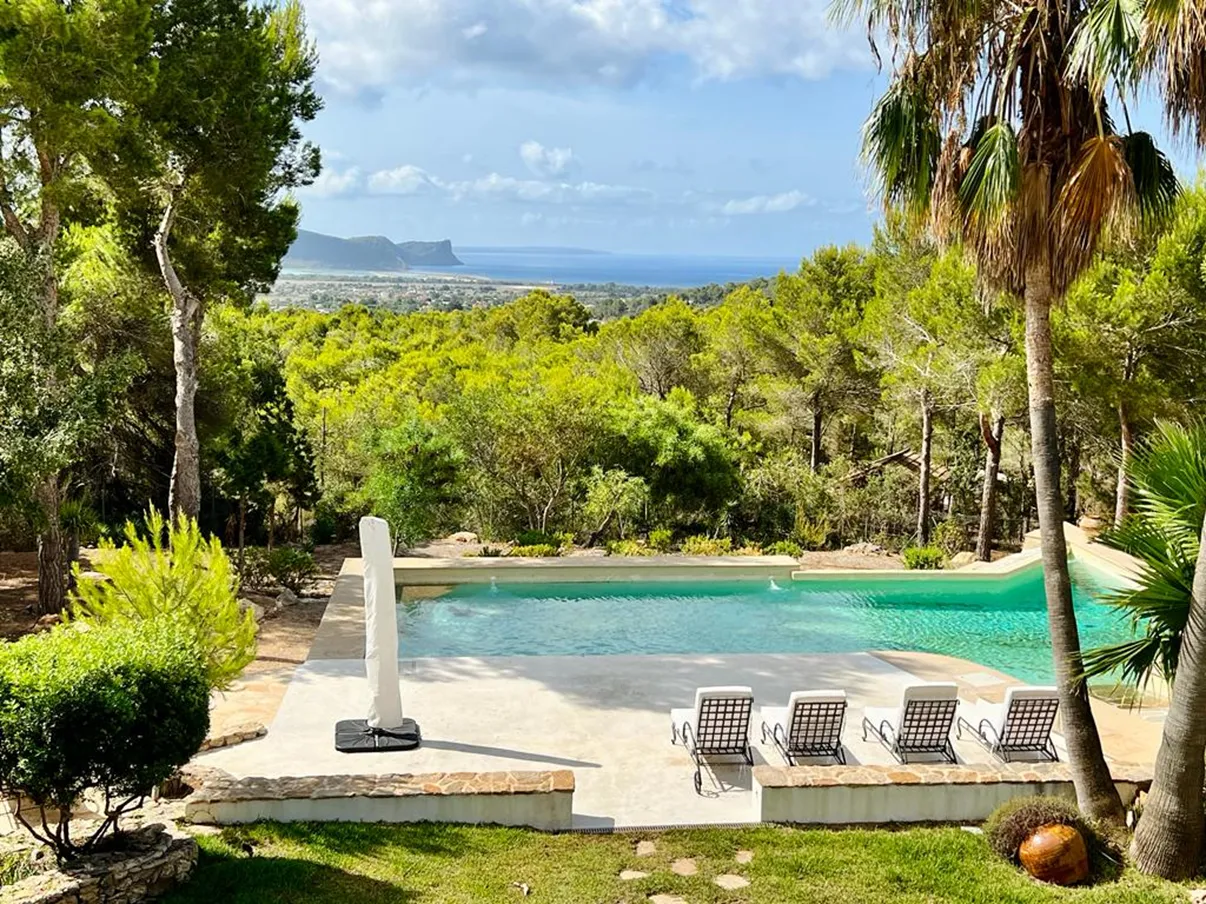
Discover the dynamic Ibiza property market and seize the opportunity to buy property in Ibiza:
- Is Now a Favorable Time to Make a Property Investment?
- How does the property buying process unfold in Ibiza?
- What roles do a notary, a lawyer and a tax advisor play?
- Do I need to open a bank account in Ibiza when purchasing a property?
- Which documents are needed to buy a property?
- What additional expenses should I consider when purchasing a property?
- Can I take out a mortgage to buy a property on Ibiza?
- What are the ideal regions for buying your property in ibiza?
- Do you need a reliable and reputable real estate agent on Ibiza?
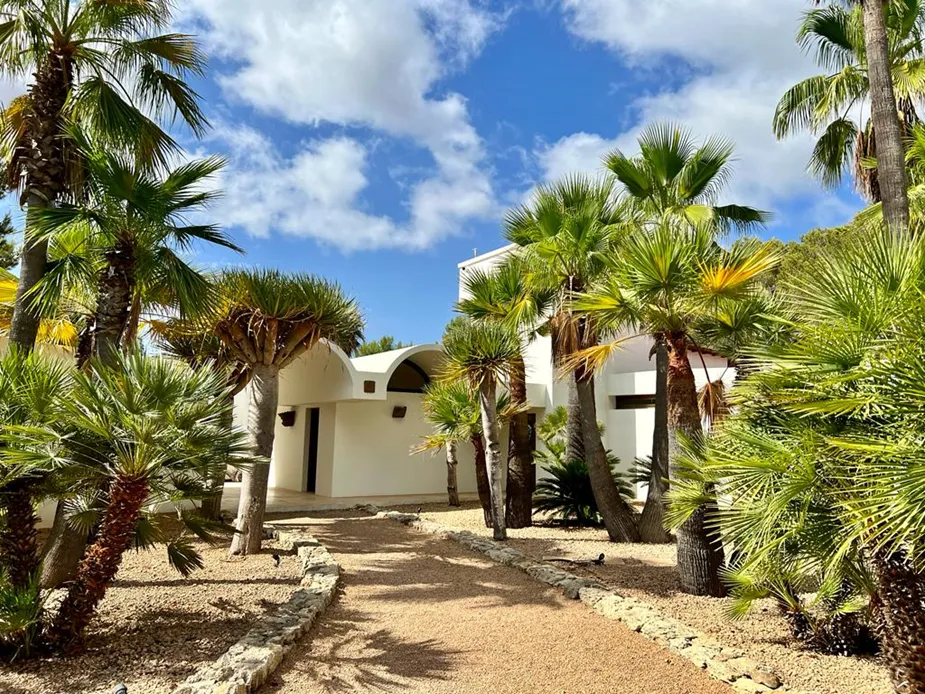
Keeping these factors in mind will help you make well-informed decisions throughout the buying process.
Is Now a Good Time to Buy Property in Ibiza?
Ibiza continues to attract international buyers looking for both permanent residences and second homes. Limited land, strict planning rules and steady interest in well-located properties keep the market competitive, although prices and demand vary strongly by area, property type, condition and legal status. That is why every opportunity should be assessed on its own merits rather than on general expectations of future price growth or rental income. For a closer look at the market, read our article on investing in Ibiza property in 2026.
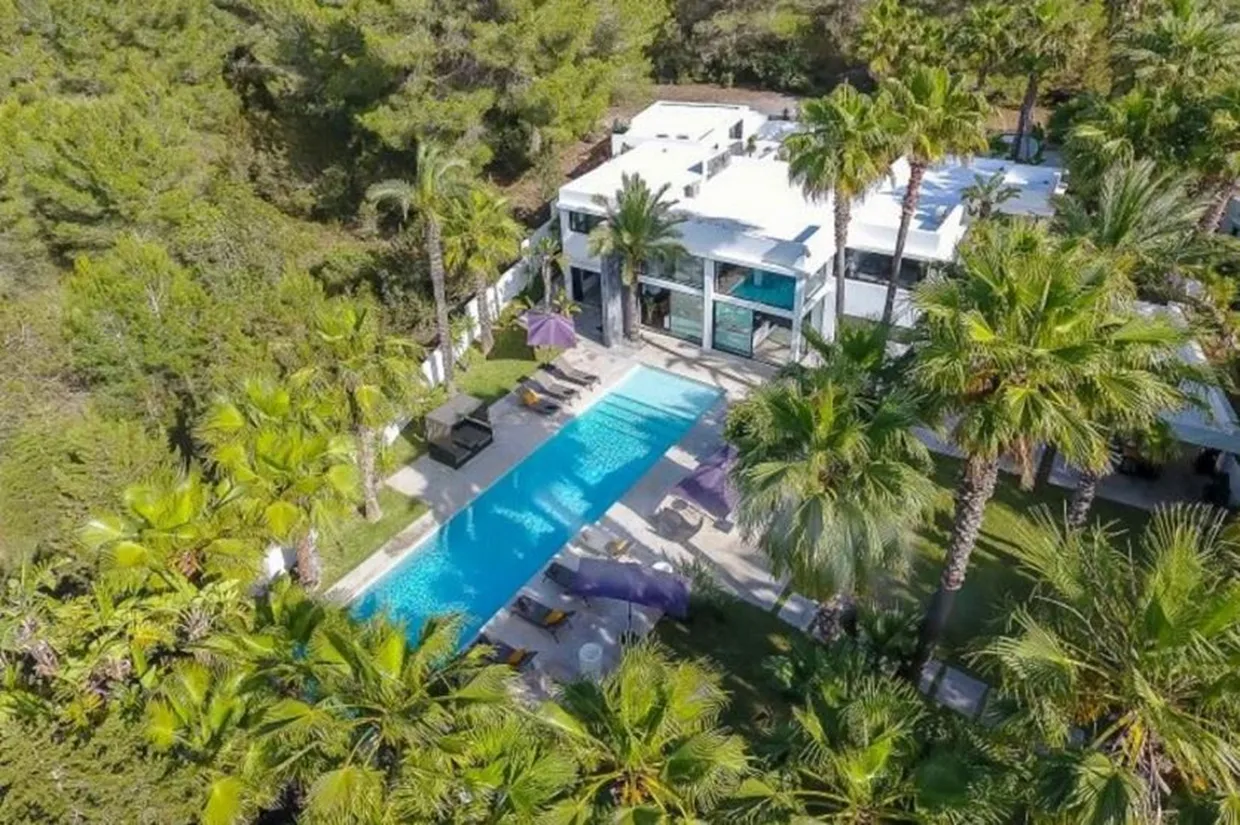
How Does the Property Buying Process Work in Ibiza?
Buying a property in Ibiza usually follows a few clear stages. Once buyer and seller agree on the main terms, they often sign a reservation agreement that takes the property off the market for a short period. This step is common but not legally required. Before committing, the buyer’s lawyer carries out the legal due diligence, checking ownership, mortgages and other registered charges, outstanding debts, planning and licensing matters and the legal status of the property. Our article on what to check before buying in Ibiza explains the most common pitfalls. When the checks are complete, both parties usually sign a private purchase agreement, the Contrato de Arras, and the buyer pays a deposit, often around 10% of the price, although the amount is not fixed by law.
The purchase is completed by signing the public deed of sale (Escritura Pública de Compraventa) before a Spanish notary, where the remaining price is paid and the keys are handed over. The taxes are then settled and the deed is submitted to the Property Registry, so that the buyer is officially registered as the owner. We strongly recommend independent legal advice before signing any binding agreement or paying a deposit. If you are selling rather than buying, our Seller’s Guide explains the process and costs for sellers.
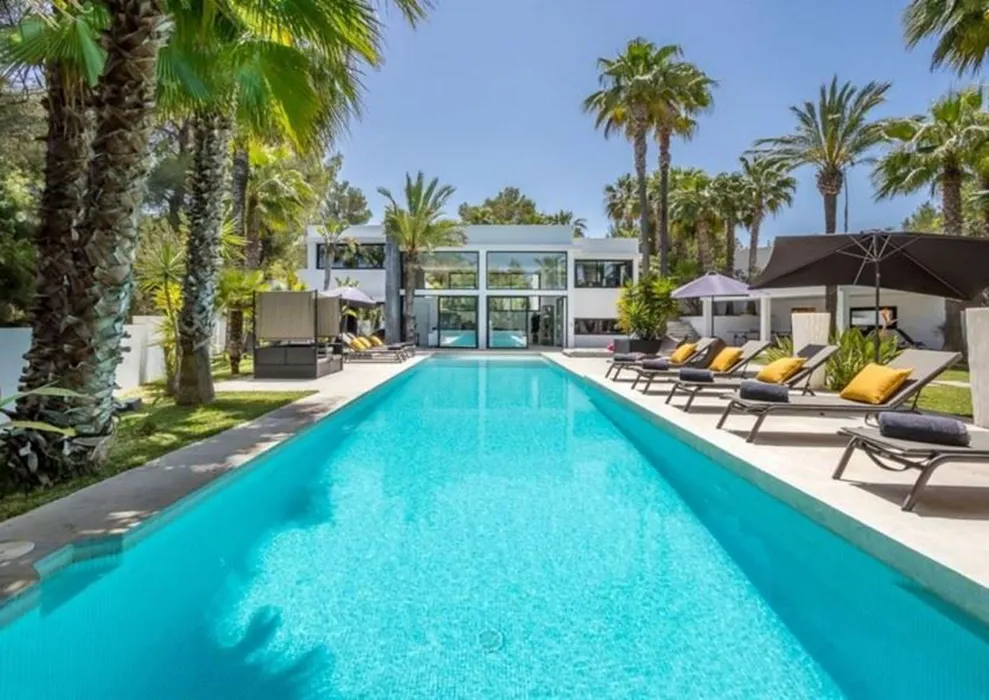
What Roles Do a Notary, Lawyer and Tax Advisor Play When Buying Property in Ibiza?
Several professionals are involved when buying a property in Ibiza, and each has a different role. Understanding these roles is especially important for international buyers.
- The lawyer. An independent lawyer acting for the buyer carries out the legal due diligence before completion, checking the Land Registry, ownership and charges, planning and building permits, licences, debts, community matters and the purchase contracts. The lawyer also coordinates the transaction with the seller’s side, the notary and other professionals.
- The notary. The Spanish notary is an impartial public official who formalises the sale in the public deed. The notary verifies the identity of the parties, reviews registry information and payment details and explains the legal and tax obligations, but does not replace the buyer’s own lawyer or carry out the full legal checks.
- The tax advisor. A qualified tax advisor explains the tax consequences of the purchase based on your residency status, personal situation and the type of property, which is especially relevant for international buyers and higher-value transactions.
- The gestor. A gestoría helps with administrative tasks such as tax filings and submitting documents to the authorities or the Property Registry, but is not a substitute for independent legal or tax advice.
Should You Arrange a Building Survey Before Buying in Ibiza?
A technical building survey is not automatically part of a property purchase in Ibiza. Many buyers therefore appoint an independent architect or engineer to inspect the condition of the property, especially for older houses, fincas, renovated homes or buildings with extensions or structural changes. This inspection is separate from the legal checks and from a valuation, and it can reveal structural defects or construction issues before you commit.
For new builds and major renovations, the buyer’s lawyer should also confirm that the required licences and occupancy documents are in place. For high-end properties in particular, combining legal and technical checks is essential before signing. You can also discover more about some of the most exclusive villas in Ibiza and the types of luxury properties available across the island.
Do I Need a Spanish Bank Account to Buy a Property in Ibiza?
A Spanish bank account is not legally required, but it makes the purchase and the later running of the property much easier, especially for international buyers. The purchase price can also be paid from an account abroad, as long as the payment can be clearly documented and meets Spanish banking and anti-money-laundering rules. When the deed is signed, the notary records how and from where the payments were made.
After the purchase, a Spanish account is practical for recurring costs such as the local property tax (IBI), community fees, electricity, water and insurance. Foreign buyers also need an NIE (Número de Identidad de Extranjero), the personal tax identification number for foreigners, which is used for all tax and administrative steps of the purchase.
Which Documents Are Needed to Buy a Property in Ibiza?
The exact documents depend on your personal situation, nationality, financing and the structure of the purchase. In a typical purchase by an international buyer, you will usually need the following.
- A valid passport or national identity card
- A Spanish NIE number
- Details and proof of the agreed payment method
- Bank details for the transfers made for the purchase
- Proof of deposits or payments already made
- Documents on the source of funds, where required under anti-money-laundering rules
Additional documents may be needed if you buy with a mortgage, through a company, together with another person or with a power of attorney. CW Real Estate Ibiza coordinates the practical side of the purchase, helps with the NIE application and puts you in touch with experienced legal, tax and administrative professionals, including an independent lawyer who speaks English, German, Spanish and French.
What Additional Costs Should I Consider When Buying a Property in Ibiza?
The additional costs depend on the purchase price, whether the property is a resale or a new build, your personal situation and whether you use a mortgage. As a guide, most buyers of luxury villas in Ibiza should budget around 12% to 14% on top of the purchase price for taxes, legal fees, notary and Land Registry costs.
Transfer Tax (ITP) on Resale Properties
In the Balearic Islands, the transfer tax (ITP) on resale properties is progressive. Each rate applies only to the part of the price that falls within its bracket.
| Property Value Bracket | ITP Rate |
|---|---|
| Up to €400,000 | 8% |
| €400,000 to €600,000 | 9% |
| €600,000 to €1,000,000 | 10% |
| €1,000,000 to €2,000,000 | 12% |
| Over €2,000,000 | 13% |
For example, on a €5 million villa the transfer tax comes to around €600,000, or roughly 12% of the price. Reduced rates or tax benefits may apply in certain circumstances.
The other main costs are the following.
- VAT and stamp duty on new builds. The first purchase of a new home from a developer is subject to 10% VAT (IVA) plus stamp duty (AJD) of 1.5%, which rises to 2% for properties worth €1 million or more.
- Legal fees. These depend on the value and complexity of the purchase and are often around 1% plus VAT. Ask your lawyer for a written quote before you start.
- Notary and Land Registry. These follow official fee scales based on the value of the transaction and are not a fixed percentage.
- Mortgage costs. The borrower usually pays the bank valuation, while the bank covers most of the costs of formalising and registering the mortgage. Additional bank or broker fees may apply.
- Other costs. Depending on the purchase, there may be costs for a technical survey, architect, tax advice, power of attorney or translations.
Because costs vary with each property and buyer, we recommend asking an independent lawyer or tax advisor for an individual cost calculation before signing a binding agreement.
Can I Get a Mortgage to Buy a Property in Ibiza?
Yes, both residents and non-residents can finance a property in Ibiza. For non-resident buyers, Spanish banks usually lend around 60% to 70% of the value, based on the lower of the purchase price and the bank’s own valuation. The exact amount depends on your income, financial profile, existing debts and the property itself. Loan terms are typically up to 20 or 25 years, and most banks expect the mortgage to be repaid by around the age of 75. In practice, non-resident buyers should plan to cover at least 30% to 40% of the price plus the purchase costs from their own funds. Our guide to getting a mortgage in Ibiza explains the process in detail.
The bank also checks the legal and physical status of the property, so homes with planning irregularities or incomplete documents can be harder to finance. For high-net-worth and private-banking clients, more specialised financing structures based on other assets or banking relationships may be available. For individual advice, you can contact our mortgage consultant Howard Steel of Mortgage Direct, who specialises in financing for international property buyers.
What Are the Best Areas to Buy Property in Ibiza?
Ibiza is divided into five municipalities, Eivissa (Ibiza Town), Santa Eulària des Riu, Sant Josep de sa Talaia, Sant Antoni de Portmany and Sant Joan de Labritja, and each offers a different mix of lifestyle, landscape, accessibility and property types. Some buyers want to be close to Ibiza Town, the marinas and restaurants, while others look for privacy, countryside, beaches or sea views. For a detailed comparison of prices, privacy and lifestyle in each location, read our article on the best areas to buy property in Ibiza.
Buying Property in Sant Josep de sa Talaia, Ibiza
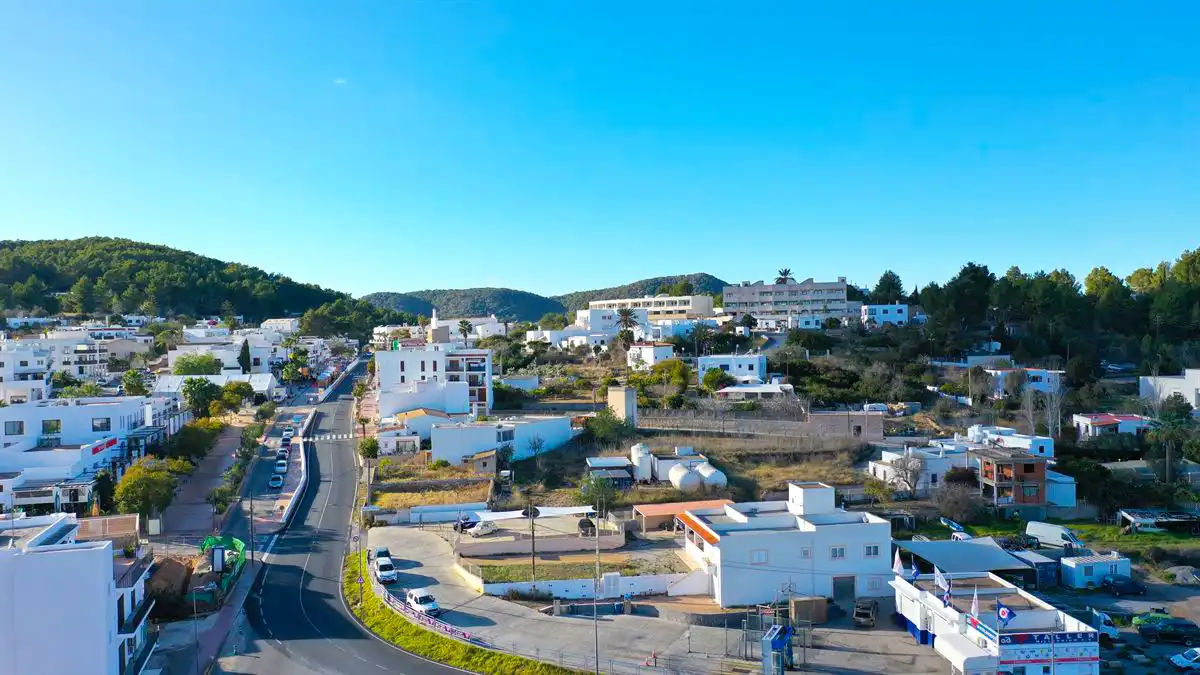
Located in the south and west of Ibiza, Sant Josep de sa Talaia is one of the island’s most diverse municipalities. It stretches from the outskirts of Ibiza Town along the south-western coast towards the Bay of Portmany and San Antonio, combining traditional villages and countryside with pine-covered hills, dramatic coastline and some of Ibiza’s best-known beaches, such as Cala Comte and Cala Bassa. The south coast of the municipality is also home to some of the most exclusive residential areas on the island, including Es Cubells and Cala Jondal.
The property market is just as varied, from modern luxury villas with sea and sunset views to traditional country houses, fincas and homes in quiet rural locations. This makes Sant Josep particularly attractive to buyers who want privacy and nature while staying within easy reach of Ibiza Town, the airport, beaches and restaurants. Because each part of the municipality offers a very different lifestyle, it is worth comparing the individual areas carefully before deciding where to focus your search.
Buying Property in Santa Eulària des Riu, Ibiza
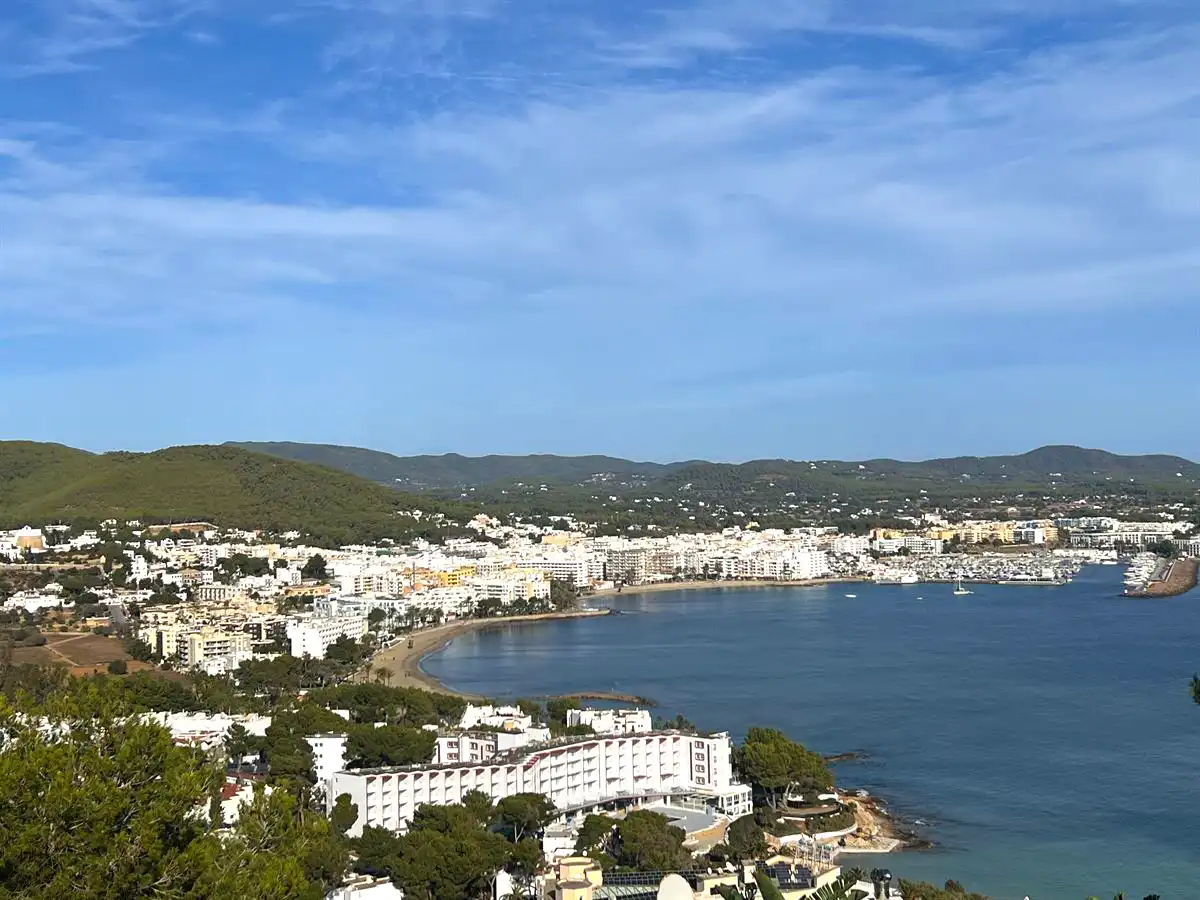
Santa Eulària des Riu is one of Ibiza’s most established residential municipalities, stretching from the east coast into the interior of the island. It combines beaches, countryside, traditional villages and well-developed residential areas, which makes it popular for both year-round living and second homes. Well-known locations include Santa Gertrudis, Jesús, Sant Carles and Es Puig d’en Valls, each with its own character, while the town of Santa Eulalia itself offers a marina, shops, restaurants and services all year round.
The property market is just as diverse, with modern villas, traditional country houses and fincas, apartments close to the town centre and marina, and homes in quieter countryside locations. This variety makes the municipality suitable for buyers with very different lifestyles and requirements.
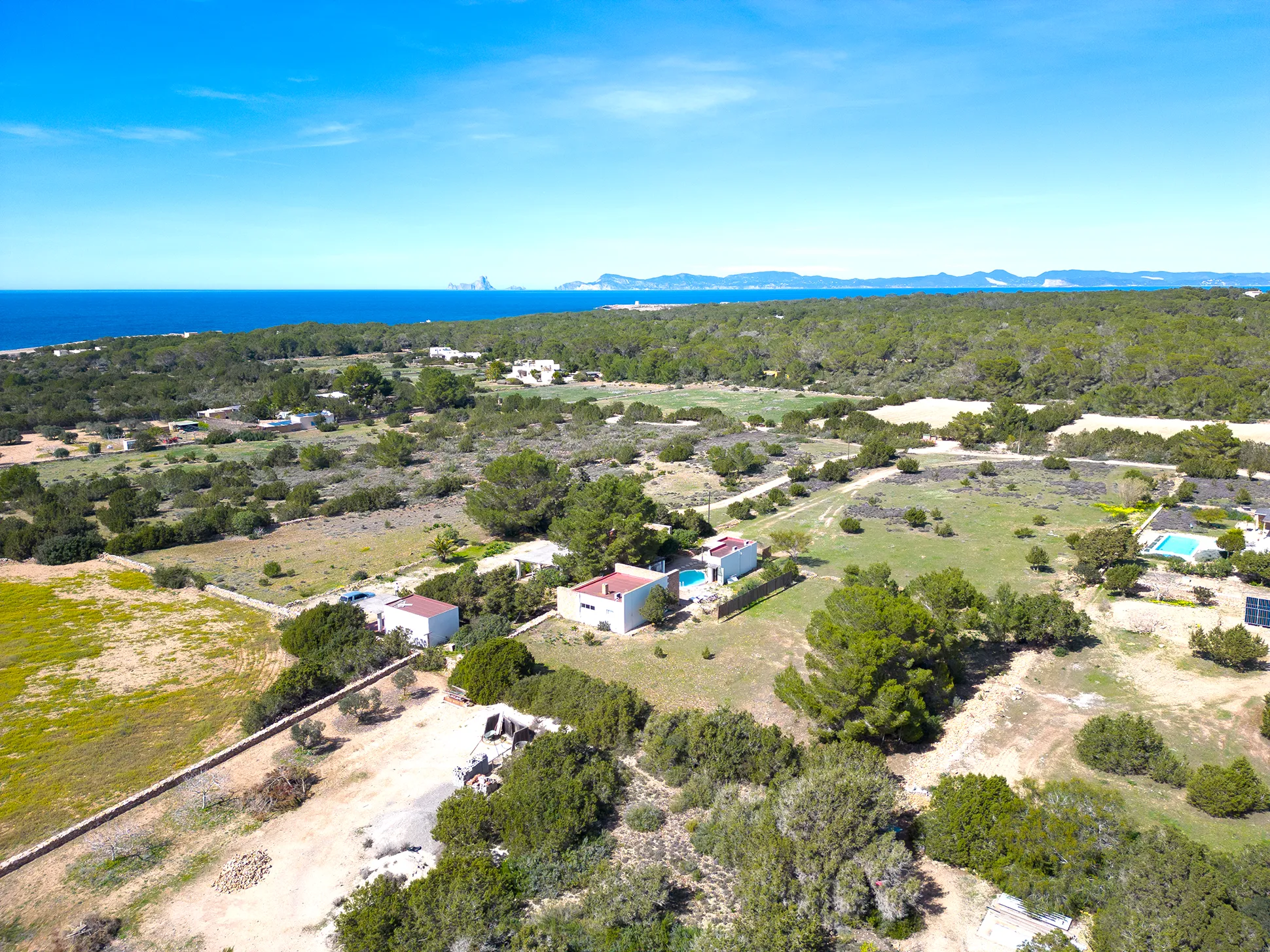
Buying Property in and around Ibiza Town
Ibiza Town, also known as Eivissa, combines the island’s historic centre with modern neighbourhoods, marinas, beaches and services all year round. At its heart lies Dalt Vila, the fortified old town and part of Ibiza’s UNESCO World Heritage Site, surrounded by a lively centre with shops, restaurants and schools. Talamanca and Ses Figueretes offer beachside living close to the centre, while Marina Botafoch is known for modern apartments, marina views and restaurants.
The property market here is particularly varied, from apartments in the old town and modern residences by the marina to homes near the beach and larger villas just outside the city. Popular residential areas nearby include Can Rimbau, Can Furnet, Cap Martinet, Roca Llisa and S’Estanyol. They belong to the municipality of Santa Eulària des Riu, but buyers often consider them because they offer villas and privacy within a few minutes of the city.
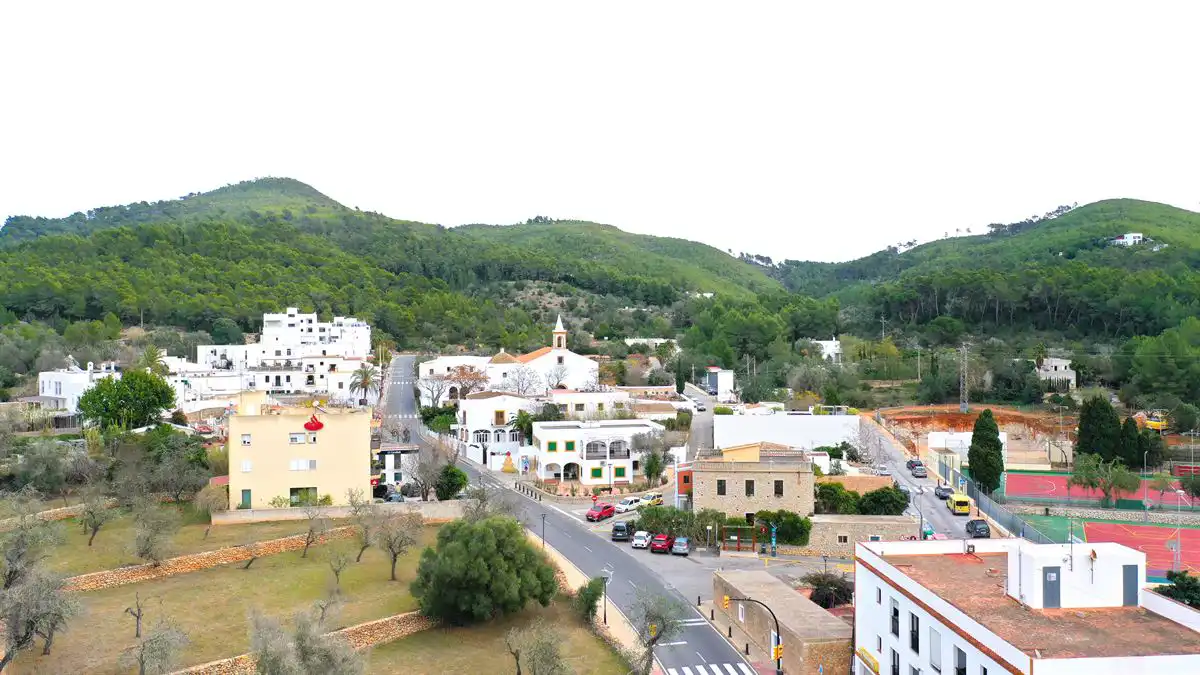
Buying Property in Sant Joan de Labritja, Ibiza
Located in the north of Ibiza, Sant Joan de Labritja is one of the island’s most rural and unspoilt municipalities, with wide countryside, pine-covered hills, traditional farmland and a rugged coastline. It is made up of four parishes, Sant Joan, Sant Miquel de Balansat, Sant Vicent de sa Cala and Sant Llorenç de Balàfia, and includes coastal villages such as Portinatx, Port de Sant Miquel and Cala de Sant Vicent. Among its most distinctive beaches are Benirràs, known for its sheltered bay and bohemian atmosphere, and the small cove of Cala Xarraca.
The property market here focuses mainly on countryside homes, traditional fincas, villas surrounded by land and houses in quiet coastal locations. Development is more limited than in other parts of the island, so the area keeps its strong rural character, which makes it ideal for buyers looking for privacy, nature and a slower way of life.
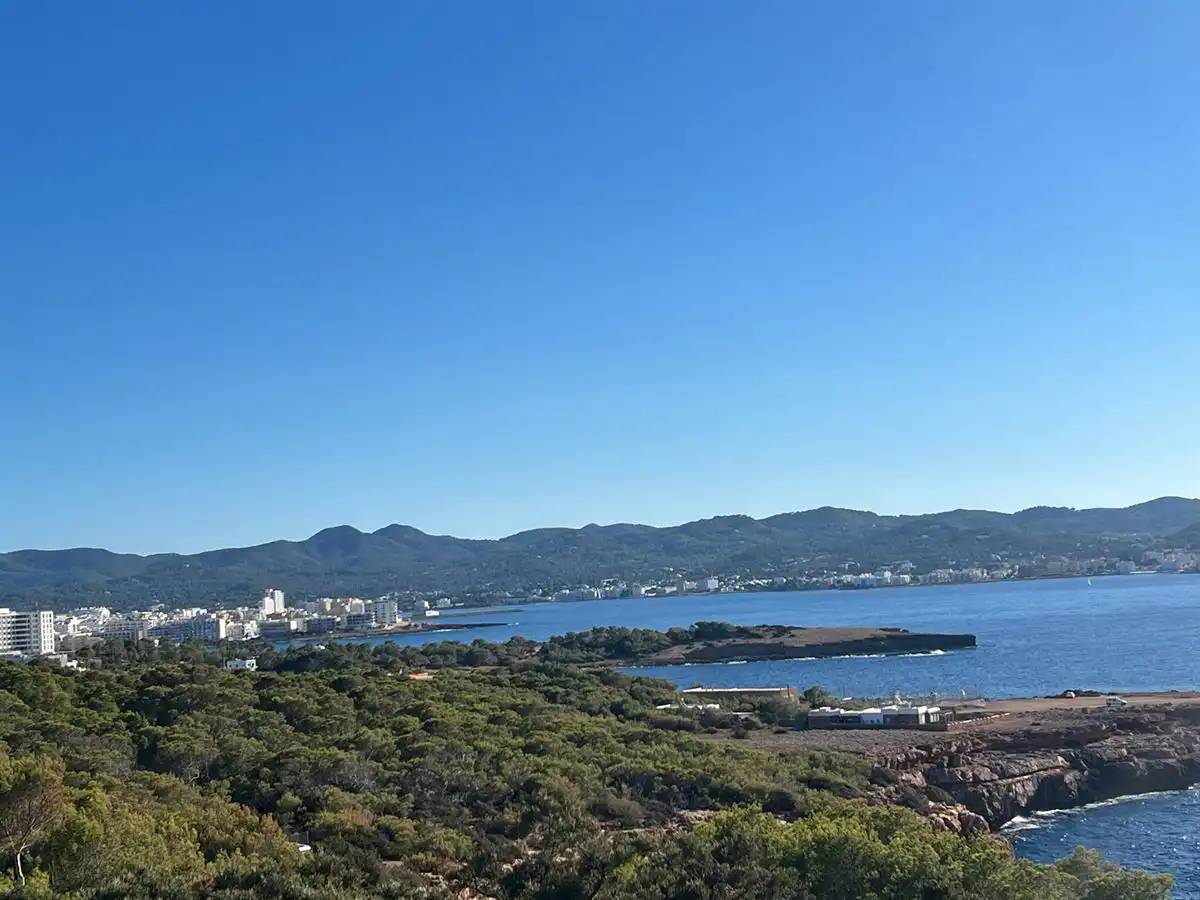
Buying Property in and around San Antonio, Ibiza
The west coast around Sant Antoni is known for its sunsets, beaches, marina and restaurants, but beyond its famous nightlife the municipality also offers quiet coves, traditional countryside and a varied food scene. Cala Salada is loved for its turquoise water and pine-covered coastline, while Cala Gracio and the smaller Cala Gracioneta are sheltered coves with sandy shores and clear water. For a quieter residential setting close to the sea, Can Germa is an established area within easy reach of the town and the beaches.
The property market ranges from apartments and townhouses close to the town centre to villas and homes in quieter residential areas near the coast, so buyers can combine easy access to services with beaches, sea views and peaceful surroundings.
Why Buy Your Property in Ibiza with CW Real Estate Ibiza
Choosing the right agency is one of the most important decisions when buying in a market like Ibiza, where local knowledge, trust and discretion make all the difference. CW Real Estate Ibiza was founded in 2010 and has guided international buyers on the island for more than 15 years, including the sale of landmark properties such as Can Nemo and Can Jondal. In 2024 our agency received the European Property Award for Real Estate Agency 2-4 Offices, Spain, and many well-known clients value our discretion and access to properties that are never advertised online. Learn more about why clients choose CW Real Estate Ibiza.
We guide you through every step, from the first viewing to the signing at the notary, and keep you informed about the market, the legal checks, the costs and the financing options along the way. Whether you are buying your first home on the island or adding to an existing portfolio, contact our team for a personal consultation about your search.

Written by: Christian Wolf, CEO
The efficiency of a real estate agent when selling or buying a property in Ibiza -
The CW Group Ibiza is at your disposal with its many years of experience.
FAQs Buying a Property in Ibiza
Do I Need a Lawyer to Buy a Property in Ibiza?
It is strongly recommended to appoint an independent lawyer who acts exclusively in the buyer’s interests. The lawyer can check the ownership of the property, registered charges or mortgages, outstanding property-related debts, licences, planning matters and the terms of the purchase contracts before the buyer enters into a binding agreement. The Spanish notary formalises the transaction but does not replace the buyer’s independent legal due diligence.
Do I Need an NIE Number to Buy a Property in Ibiza?
Foreign buyers will normally need a Spanish NIE (Número de Identidad de Extranjero) for the tax and administrative procedures associated with buying property in Spain. It is advisable to begin the application process early enough to avoid unnecessary delays during the transaction.
Do I Need a Spanish Bank Account to Buy a Property in Ibiza?
No. A Spanish bank account is not a legal requirement for purchasing property in Ibiza. Payments may be made from an overseas account provided that the payment method can be properly documented and complies with the applicable banking and anti-money-laundering requirements. However, a Spanish bank account can make it easier to pay recurring expenses such as IBI, community fees, electricity, water and insurance after completion.
What Taxes and Additional Costs Should I Consider When Buying Property in Ibiza?
For resale properties in the Balearic Islands, Transfer Tax (ITP) is calculated using a progressive scale, with the current general rates ranging from 8% to 13% across the corresponding value brackets. The first purchase of a new residential property from a developer is generally subject to 10% VAT (IVA) and may also be subject to Stamp Duty (AJD), for which the general rate in the Balearic Islands is currently 1.5%. Buyers should also allow for legal fees, notary and Land Registry costs and, where applicable, valuation and other professional expenses.
Can I Get a Mortgage to Buy a Property in Ibiza?
Yes. Both resident and non-resident buyers can apply for mortgage financing. For non-resident buyers, depending on the lender and the borrower’s financial circumstances, financing of approximately 60% to 70% of the property’s value may be available. Mortgage lending is generally based on the lower of the agreed purchase price and the bank’s valuation, and every application is assessed individually.
How long does it take to buy a property in Ibiza?
From the reservation to the signing at the notary, a purchase usually takes around 6 to 10 weeks when buying with cash. If you need a mortgage, allow a few extra weeks for the bank valuation and loan approval. The legal checks, obtaining an NIE and preparing the purchase contract all happen within this period.
What Is a Contrato de Arras and How Much Deposit Is Normally Paid?
A Contrato de Arras is a private purchase agreement commonly used once the necessary checks on the property have been completed and both parties are ready to proceed. The buyer normally pays an agreed deposit at this stage. Around 10% of the purchase price is common in many transactions, although this percentage is not fixed by law and can be agreed between the parties.
What Is the Role of the Notary When Buying Property in Ibiza?
The Spanish notary is an impartial public official who formalises the transaction through the public deed of sale (Escritura Pública de Compraventa). The notary verifies matters such as the identity and legal capacity of the parties, relevant registry information and the payment methods used. The notary’s role does not replace the independent legal advice and due diligence carried out by the buyer’s lawyer.
What Should Be Checked Before Buying a House or Villa in Ibiza?
Legal due diligence should include checks on ownership, registered charges, outstanding debts, legally registered areas, licences, building permissions and the planning status of the property. When purchasing an older house, finca, renovated property or a home with extensions or structural alterations, buyers may also wish to arrange an independent technical inspection by an architect, technical architect or engineer.
Which Documents Does an International Buyer Normally Need?
International buyers will normally need a valid passport or national identity document, a Spanish NIE number, bank and payment information and documentation that allows the payment methods and source of funds to be identified where required. Additional documents may be necessary where mortgage financing is used, several people are purchasing together, the property is acquired through a company or the transaction is completed by means of a power of attorney.
What Is the Best Area of Ibiza to Buy Property?
The best area depends on the buyer’s lifestyle, budget and preferred type of property. Ibiza Town and its surroundings offer proximity to marinas, restaurants and services; Santa Eulària des Riu combines coastal locations, villages and countryside; Sant Josep offers beaches, sea views and a wide range of residential areas; Sant Antoni is known for the west coast and its sunsets; and Sant Joan de Labritja is particularly attractive to buyers looking for nature, tranquillity and privacy.
Can I rent out my property in Ibiza?
Yes, but the rules depend on the length of the stay. Short-term holiday rentals of less than one month require a valid tourist rental licence, and new licences are very limited in Ibiza. Rentals of one month or longer, such as seasonal or long-term rentals with a proper rental contract, do not require a tourist licence. If short-term rentals matter to you, check the licence status before you buy.